



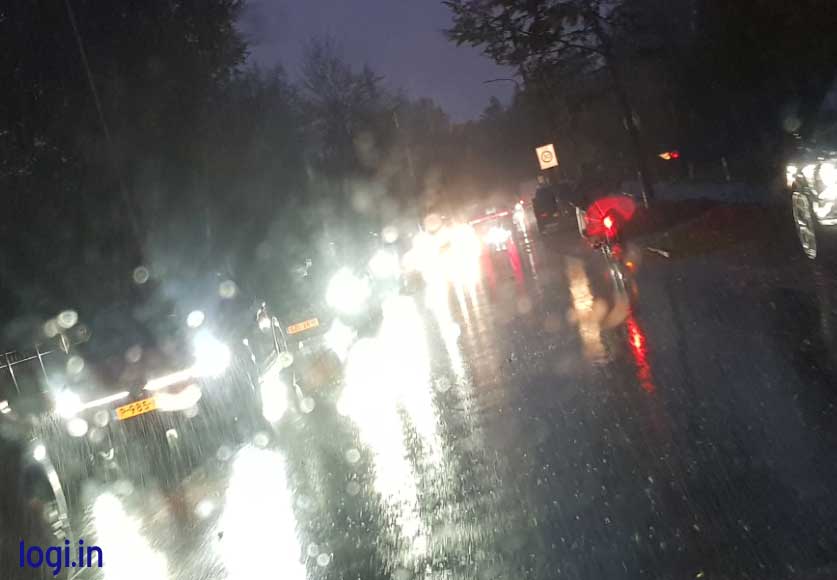
Vulnerable road users rendered nearly invisible by blinding headlights. Dangerous situations arise due to overly permissive approval policies.
Do you find the blinding headlights of oncoming vehicles annoying? You are not alone.
Have you ever nearly collided with a cyclist because your vision was obscured by the excessively bright halogen or LED lights of an oncoming vehicle?
It’s not just you.
According to car manufacturers, LED headlights provide better visibility, improve aerodynamics and consume less energy. But to what price? Those on the receiving end certainly don’t see it that way: research by the Dutch website Marktplaats shows that more than half of all road users (56%) are bothered by the bright headlights on new cars.
Anyone driving during the darker months of the year might wonder how European regulatory bodies ever approved these types of lights. On wet road surfaces—like the one shown in the photo—a driver can be completely blinded by an oncoming vehicle, making pedestrians and cyclists impossible to see.
Earlier this year, Tesla was even forced to recall 20,000 vehicles in the U.S. because their headlights were too bright. Intense lighting has become a well-known source of frustration among drivers, sometimes leading to heated reactions on the road: more than a quarter (28%) admit to having reacted aggressively—by honking or flashing their lights—at oncoming drivers with overly bright headlights. Some car owners even feel uncomfortable about their own vehicles; more than one in six (17%) say they have felt embarrassed by the brightness of their own headlights when driving past others.
Manufacturers of passenger cars and commercial vehicles aim to address this issue by incorporating greater intelligence into these headlights—for instance, by automatically deactivating the portion of the beam that would dazzle an oncoming driver.
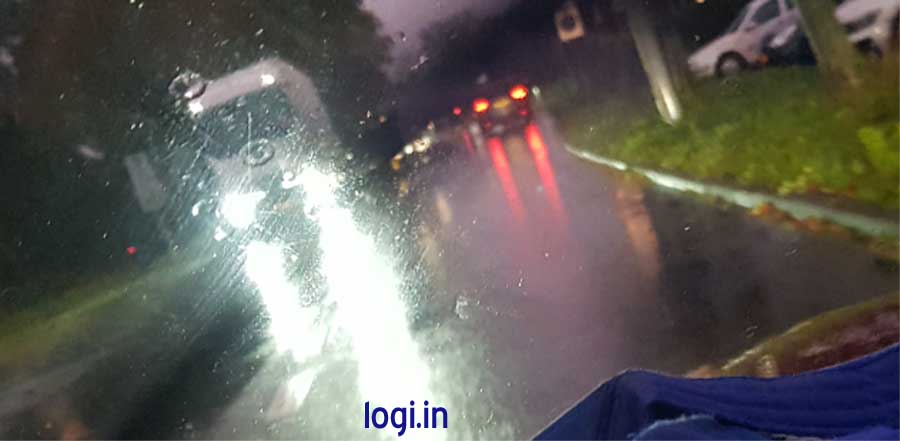
However, as readers of this article may observe, these intense light beams can also cause glare through reflections. The only effective solution may be to tighten regulations and ban this type of headlight altogether.
Excessively bright lights are not the only source of frustration with modern vehicles, however. Interacting with dashboard touchscreens also frequently leads to unsafe situations. One in six road users (16%) has even been involved in—or nearly involved in—a collision while using such a screen while driving. Among young people aged 18 to 30, this figure rises to nearly a third (29%). It is hardly surprising, then, that more than a third (38%) would prefer to press a physical button rather than navigate through on-screen menus.