



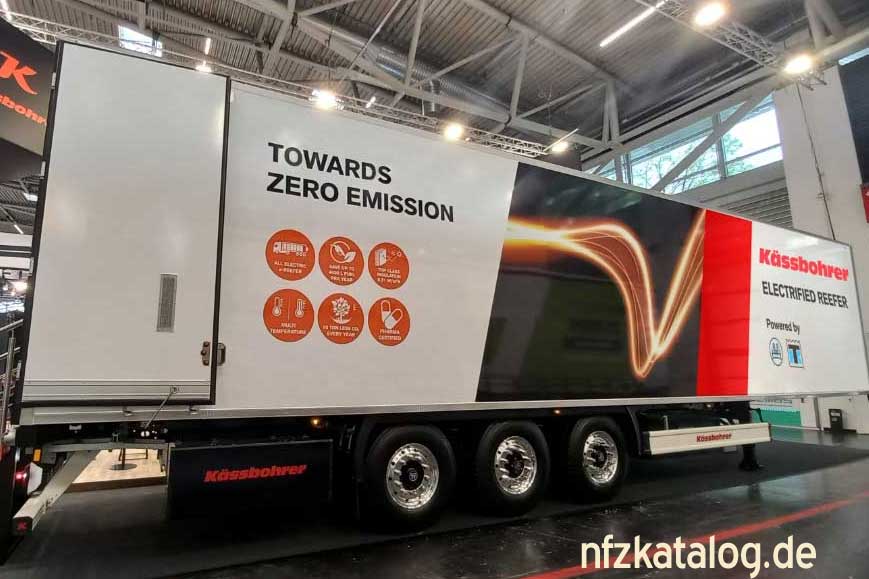
Complex logistics planning is the next challenge for electric freight transport. This was the conclusion reached at Kässbohrer‘s K-Expert Talks at IAA Hanover.
“Unlike transport using diesel vehicles, electric transport requires the synchronization of charging windows, route planning, depot infrastructure, battery management, payload optimization, and driver schedules. Future competitiveness will therefore rely heavily on digital planning tools capable of integrating charging availability, route management, and operational planning into a single system.”
This is according to Frank Kressmann, Director of Transport and Environment at Procter & Gamble, speaking during the K-Expert Talks hosted by trailer manufacturer Kässbohrer. P&G is involved in the ZEFES project, which demonstrates electrified long-haul transport in Europe under real-world conditions. ZEFES is not merely a theoretical project; thousands of kilometers have already been covered using various test vehicles, spanning from Scandinavia to Spain.
Intermodal transport will also play a key role in the future of freight transport. By combining rail transport with electrified first- and last-mile connections, operators can utilize shorter road segments that fall within the operational range of electric vehicles, while maximizing overall transport efficiency and reducing emissions, Kressmann explains.
The Expert Talks highlighted that zero-emission truck and trailer technology is no longer a bottleneck for the large-scale electrification of road transport. Electric vehicles have proven to be reliable, even for long-haul operations. Furthermore, the range of this equipment continues to improve, and battery charging speeds are steadily increasing. Following the rise of the electric truck, the electric trailer is also gaining increasing prominence. During an extensive test involving a Kässbohrer electric container trailer equipped with a ZF TrailTrax driven axle, the range of the vehicle combination was found to increase by half.
One of the current bottlenecks—unsurprisingly—is charging infrastructure. There are still too few locations where electric trucks can be charged. Other obstacles include divergent regulations across various countries and a lack of coordination in logistics planning.
“Large-scale adoption of zero-emission freight transport now depends on accelerating infrastructure development, harmonizing legislation throughout Europe, enabling intermodal solutions, and creating the digital systems required to manage increasingly complex transport operations. Furthermore, ongoing collaboration among vehicle manufacturers, trailer manufacturers, logistics operators, infrastructure providers, research organizations, and policymakers will be essential to transform successful demonstrations into scalable European freight networks,” the panel concludes.