


Renault Trucks among the leaders in sustainable manufacturing. The truck manufacturer earns a high rating on the EcoVadis scale for responsible business operations.
There is no escaping the need for climate action. At Renault Trucks (part of the Volvo Group), this has been a priority for years. It goes well beyond simply selling fuel-efficient—or, ideally, zero-emission—trucks; it encompasses a much broader scope, including making company facilities more sustainable, sourcing materials with minimal environmental impact, ensuring fair treatment of employees, and refusing to do business with companies that engage in modern slavery. Collectively, this is known as Corporate Social Responsibility (CSR).
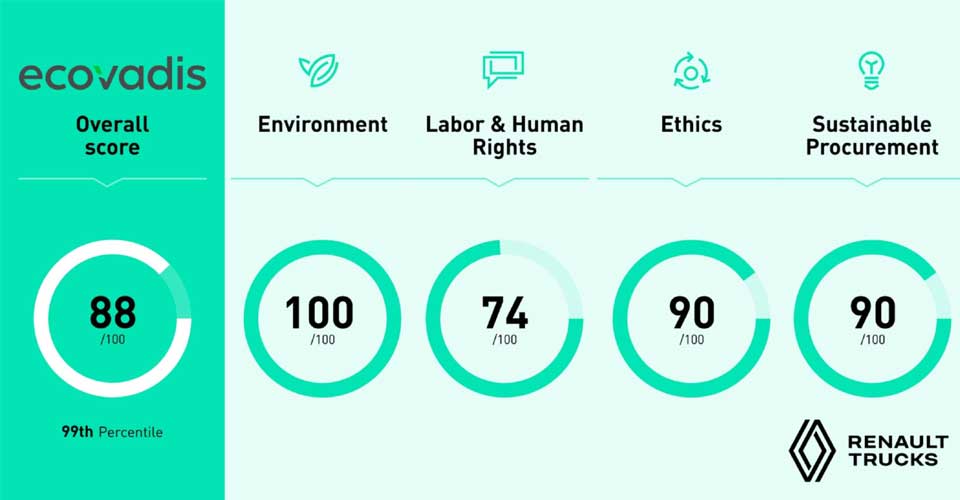
Each year, Renault Trucks undergoes an assessment by an independent third party: EcoVadis. After achieving ‘Gold’ status for seven consecutive years, Renault Trucks has now reached the highest level of EcoVadis recognition for the first time: the ‘Platinum’ medal. With a score of 88 out of 100, the manufacturer now ranks among the top 1% of all companies evaluated by EcoVadis. This recognition confirms Renault Trucks’ ongoing progress in sustainability across four key assessment categories: Environment, Labor & Human Rights, Ethics, and Sustainable Procurement.
Compared to last year, the score has improved by five points—and by 25 points since 2019. A notable highlight in the current assessment is the perfect score of 100/100 for both sustainability policy and its implementation. Furthermore, for the fifth year in a row, the truck manufacturer achieved a maximum score of 100/100 in the ‘Environment’ category. This achievement reflects not only the manufacturer’s efforts to make road transport more sustainable, but also its commitment to reducing the environmental impact of its own industrial operations.
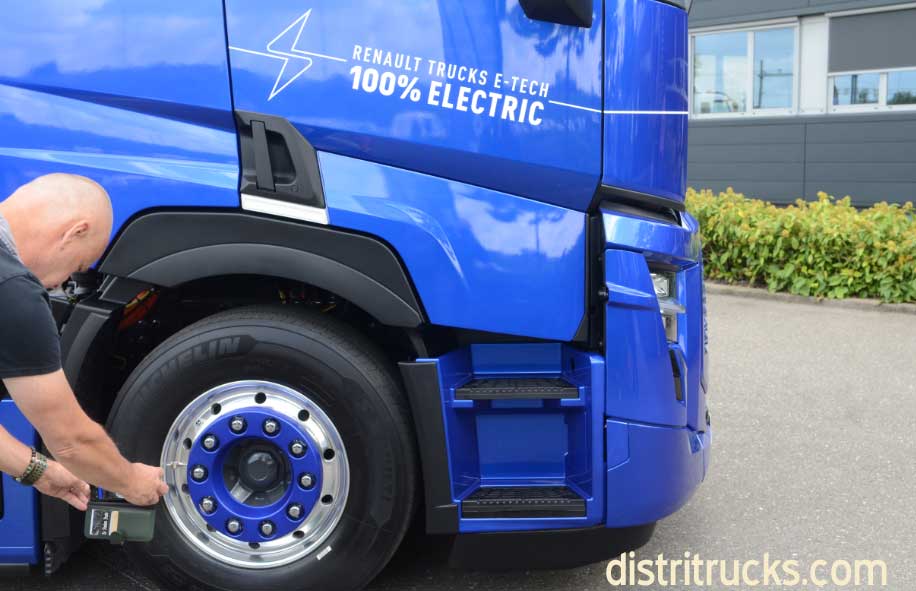
In 2026, Renault Trucks expanded its electric vehicle range with new models, including the Renault Trucks E-Tech T 780—which offers a range of up to 660 kilometers—the compact 12- and 14-tonne Renault Trucks E-Tech D models for urban applications, and the Renault Trucks E-Tech Trafic, an electric van.
At the same time, Renault Trucks continues to work on further efficiency improvements for its diesel vehicles, aiming to lower CO₂ emissions per kilometer driven in scenarios where electrification is not yet feasible.
Renault Trucks is also taking significant steps toward decarbonization within its own business operations. In 2026, the manufacturer continued the gradual electrification of its internal logistics, replacing diesel trucks with electric ones for transport between production sites.
Furthermore, Renault Trucks is working to reduce energy consumption and utilize energy sources with a smaller carbon footprint. At the production site in Lyon-Vénissieux, waste heat from industrial processes has been recovered since 2026 and repurposed to heat buildings and support production activities. Combined with a recent connection to the Lyon metropolitan area’s district heating network, this solution is expected to reduce the site’s total energy consumption by approximately 10%.
EcoVadis ratings are increasingly being incorporated into fleet renewal tenders, allowing fleet owners to demonstrate that their procurement practices are environmentally responsible.